
M&A Terminology Guide: From LOI to Closing – Every Term Explained
 Saurobh Barick
on
Saurobh Barick
on
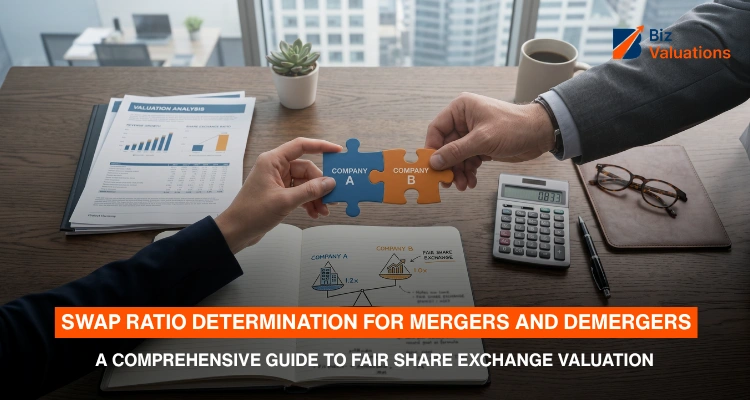
Mergers and acquisitions are among the most complex, high-stakes events a business will ever go through. Whether you are a founder preparing for your first acquisition conversation or a CFO navigating a multi-entity restructuring, the specialized language of M&A can feel like a foreign dialect.
Terms like Letter of Intent, Enterprise Value, EBITDA multiples, Earn-Out, Purchase Price Allocation, and Representations and Warranties carry enormous financial and legal weight. Misunderstanding even one of these concepts can cost you negotiating leverage, lead to unfavorable deal terms, or create post-closing disputes that drag on for years.
This guide breaks down every key M&A term you need to know, arranged by deal phase, so you can follow the full journey from the first expression of interest right through to closing and post-deal integration.
If you are involved in an M&A transaction in India and want to understand the valuation and compliance dimensions better, Biz Valuations can help you navigate each step with independent, IBBI-registered expertise.
Key Takeaways
- M&A transactions follow a structured lifecycle, and each phase introduces specific legal, financial, and regulatory terms.
- The Letter of Intent (LOI) sets the commercial framework for a deal before binding agreements are signed.
- Enterprise Value and Equity Value serve different purposes and must not be confused during negotiations.
- Due diligence is the buyer's most critical tool for validating assumptions and uncovering hidden risks.
- Earn-out structures bridge valuation gaps between buyers and sellers by tying payments to future performance.
- Purchase Price Allocation (PPA) is mandatory for accounting compliance post-acquisition and directly affects future earnings.
- In India, M&A transactions involving listed companies or cross-border transfers require SEBI and IBBI regulatory compliance.
- An independent valuation from an IBBI Registered Valuer strengthens deal credibility with auditors, NCLT, SEBI, and investors.
The Typical M&A Lifecycle: Setting the Context
Successful M&A transactions rarely happen overnight. They follow a structured progression that introduces new documentation and terminology at each phase. Understanding this flow helps every stakeholder anticipate requirements and prepare effectively.
- Strategic Planning and Preparation
- Target Identification and Outreach
- Preliminary Negotiations
- Letter of Intent (LOI) Stage
- Comprehensive Due Diligence
- Negotiation of Definitive Agreements
- Regulatory and Third-Party Approvals
- Financing Arrangements
- Transaction Closing
- Post-Closing Integration and Monitoring
Each stage builds upon the previous one, and commitments become progressively more binding. Familiarity with the associated terms at each phase reduces surprises and supports smoother deal progression.
Pre-Transaction and Deal Origination Terminology
Before the formal M&A process begins, several foundational concepts shape how deals are originated and who sits on which side of the table.
Merger
A merger involves combining two or more independent entities into a single unified organization. Common motivations include gaining greater market presence, achieving operational synergies, reducing overlapping costs, diversifying product lines, or entering new geographies. In practice, mergers can take the form of a statutory merger where one entity dissolves into the other, or they may result in the creation of an entirely new legal entity.
Acquisition
In an acquisition, one party gains control over another by purchasing its assets, shares, or business undertaking. The target may retain some operational autonomy or become fully absorbed depending on the buyer's integration strategy. Acquisitions allow buyers to accelerate growth without building capabilities from scratch.
Strategic Buyer
Strategic buyers pursue acquisitions to complement or strengthen their core operations. They might be direct competitors seeking market consolidation, suppliers aiming for vertical integration, or larger corporations expanding their portfolio. Their bids often reflect anticipated synergies that purely financial buyers might not be able to realize.
Financial Buyer
Financial buyers, such as private equity funds, venture capital firms, family offices, or investment vehicles, focus primarily on generating attractive financial returns over a defined holding period. They emphasize strong cash flows, scalable business models, and clear exit pathways, often implementing operational improvements during ownership.
Sell-Side Process
This refers to the seller's organized efforts, often supported by investment bankers or advisors, to position and market the business to qualified buyers. It includes preparing information memoranda, managing buyer outreach, and orchestrating competitive bidding processes to maximize deal value.
Buy-Side Process
Conversely, the buy-side process encompasses a prospective acquirer's search for suitable targets, evaluation of opportunities, and execution of acquisitions that align with its investment criteria or strategic goals.
Key Terms in the Letter of Intent (LOI) Phase.
The LOI phase is where the commercial framework of a deal takes shape for the first time. The terms agreed upon here set the tone for everything that follows.
Letter of Intent (LOI)
The LOI serves as an important early milestone in any M&A transaction. It outlines the principal commercial terms of a proposed deal, including the indicative purchase price, transaction structure (asset or share purchase), exclusivity arrangements, due diligence access, timelines, and key conditions. While many elements remain non-binding to allow flexibility, certain provisions, such as confidentiality and exclusivity, carry legal weight. A well-drafted LOI sets the tone for all subsequent detailed negotiations and establishes the commercial anchor from which the final agreement is built.
Indication of Interest (IOI)
Often preceding a formal LOI, an IOI provides a non-binding expression of a buyer's preliminary interest, including a valuation range and high-level terms. It helps sellers gauge serious contenders before investing significant time and resources in the process.
Exclusivity
This clause restricts the seller from engaging with other potential buyers for a defined period, typically 30 to 90 days. It protects the buyer's investment in detailed due diligence while signaling mutual commitment to the transaction.
Confidentiality Agreement (NDA)
Also known as a Non-Disclosure Agreement, this legally binding document safeguards proprietary information shared during the exploration phase. It defines permitted uses of data, restrictions on disclosure, and remedies for any breach, forming a foundational protection throughout the entire deal process.
Valuation and Pricing Concepts
Valuation sits at the heart of every M&A negotiation. Getting these concepts right determines what the business is actually worth and what the seller ultimately receives.
- Enterprise Value (EV)
Enterprise Value reflects the total economic value of a business, encompassing both equity and debt components. It is calculated as:
Enterprise Value = Equity Value + Net Debt (Debt minus Cash and Cash Equivalents)
EV provides a standardized basis for comparing companies regardless of their capital structure and remains one of the most referenced metrics in deal discussions.
- Equity Value
This represents the residual value available to common shareholders after settling all debt obligations and adjusting for cash holdings. It directly influences what sellers ultimately realize from the transaction.
- EBITDA
EBITDA stands for Earnings Before Interest, Taxes, Depreciation, and Amortization. It offers a proxy for core operating performance by stripping out non-operational and accounting variables, enabling clearer apples-to-apples comparisons across businesses.
- EBITDA Multiple
A widely applied valuation shorthand, the EBITDA multiple expresses Enterprise Value as a factor of EBITDA. For example, an 8x multiple applied to Rs. 12 crore of EBITDA yields an Enterprise Value of Rs. 96 crore. Multiples vary by industry, growth profile, margin quality, and prevailing market conditions.
- Fair Market Value (FMV)
FMV denotes the price at which an asset or business would transfer between a knowledgeable, willing buyer and seller, with neither party under duress. It underpins many regulatory and accounting requirements in Indian M&A transactions, including FEMA filings and Income Tax compliance under Rule 11UA.
- Synergy Value
This captures the incremental benefits arising from combined operations, such as cost reductions through shared services, cross-selling opportunities, supply chain efficiencies, or technology enhancements. Quantifying synergies often influences premium offers but requires careful, realistic analysis to avoid over-optimism in deal models.
Valuation Method Comparison Table
|
Valuation Method |
Best Used For |
Key Input |
Typical Use in M&A |
|
Discounted Cash Flow (DCF) |
Growth businesses, startups |
Projected free cash flows |
Fundraising, swap ratio, fairness opinion |
|
Market Comparable (EV/EBITDA) |
Established companies |
Peer group multiples |
Purchase price benchmarking |
|
Net Asset Value (NAV) |
Asset-heavy businesses |
Book value of net assets |
Liquidation, IBBI proceedings |
|
Precedent Transactions |
Industry-specific deals |
Historical M&A deal data |
Pricing guidance, negotiation |
|
Quality of Earnings (QoE) |
Mid-market acquisitions |
Normalized EBITDA |
Buyer due diligence |
Due Diligence Phase Terminology
Due diligence is where buyers verify everything the seller has presented. It is also where many deals are renegotiated or withdrawn.
Due Diligence
A thorough investigative process where buyers examine the target's financial records, legal standing, tax compliance, operational systems, intellectual property, customer contracts, human resources, and potential liabilities. It helps validate initial assumptions, uncover risks that were not visible at the LOI stage, and inform final pricing adjustments before the definitive agreement is signed.
Quality of Earnings (QoE)
QoE analysis evaluates the sustainability and repeatability of reported earnings by adjusting for one-time items, non-recurring revenues, aggressive accounting practices, or normalization adjustments. It is especially prominent in mid-market deals to ensure buyers are paying for genuine, recurring business performance rather than inflated figures.
Data Room
A centralized, secure platform, now predominantly virtual, that houses all relevant transaction documents, contracts, financial statements, and disclosures. Organized data rooms facilitate efficient buyer review while maintaining control over sensitive materials. How well a seller manages their data room often signals how well-run the business itself is.
Material Adverse Change (MAC)
A MAC clause permits the buyer to withdraw or renegotiate if a significant adverse event materially impacts the target's business, financial condition, or prospects between signing and closing. These provisions are heavily negotiated, with sellers seeking narrow definitions and buyers preferring broader protections.
Deal Structure and Agreement Terms
Once due diligence is complete, the parties move to structuring the actual transaction. The choice of deal structure has significant legal, tax, and operational implications.
- Asset Purchase
The buyer selectively acquires specific assets and assumes only designated liabilities, leaving the seller's corporate shell intact. This structure offers flexibility in risk allocation and potential tax advantages but may require third-party consents for the transfer of contracts and licenses.
- Share Purchase
The buyer acquires equity ownership directly, taking over the entire company including its historical liabilities and obligations. This approach simplifies the continuity of contracts and operations but demands deeper due diligence on legacy matters and hidden contingencies.
- Stock Purchase Agreement (SPA)
The SPA is the primary legal contract governing share acquisitions. It covers the purchase price, all closing conditions, representations and warranties, indemnities, and post-closing mechanics. It is the document that formally transfers ownership.
- Asset Purchase Agreement (APA)
The equivalent binding document for asset deals, with tailored provisions addressing which assets are transferred, which are excluded, and what transition services the seller will provide post-closing.
- Earn-Out
A performance-based payment mechanism where a portion of the consideration is deferred and released only upon achieving agreed future milestones, such as revenue targets or EBITDA thresholds. Earn-outs help reconcile differing views on valuation while aligning the seller's incentives with the business's post-closing performance.
- Working Capital Adjustment
This provision ensures the business transfers with an appropriate level of net working capital. Post-closing true-ups compare actual delivered working capital against a pre-agreed target, resulting in price adjustments that prevent sellers from extracting excess cash or leaving the business undercapitalized before handover.
- Escrow Account
A designated account holding a percentage of the purchase price, commonly between 10% and 20%, for a set period to cover potential indemnification claims. It provides buyers with security while allowing sellers eventual access to the remaining funds once the claim period expires.
Legal, Risk, and Financing Terminology
Legal protections and financing arrangements shape how risk is distributed between buyer and seller throughout the deal lifecycle.
- Representations and Warranties
Assurances provided by the seller about the accuracy of disclosed information, ownership of assets, compliance with applicable laws, financial statement integrity, absence of undisclosed liabilities, and other critical matters. These form the contractual basis for buyer protections and indemnification rights.
- Indemnification
The seller's contractual commitment to compensate the buyer for losses arising from breaches of representations, warranties, or other covenants. Limits, baskets (thresholds below which no claim can be made), and caps are standard and heavily negotiated points in most M&A agreements.
- Survival Period
The timeframe after closing during which claims for breaches of representations and warranties can be legally pursued. Fundamental representations, such as title to shares or tax obligations, often survive for longer periods than general operational representations.
- Disclosure Schedule
An accompanying document that lists exceptions or qualifications to the representations and warranties. By disclosing a specific matter formally, the seller avoids a breach even if that matter later causes a loss for the buyer.
- Leveraged Buyout (LBO)
A transaction structure that relies heavily on borrowed funds to finance the acquisition, with the target's own assets and cash flows often serving as collateral. Private equity sponsors frequently employ LBOs to amplify equity returns while using a relatively smaller equity contribution.
- Senior Debt
Secured, priority borrowing that typically carries lower interest rates due to its first-claim status on assets in default scenarios. Senior debt lenders are repaid before any other class of creditors.
- Mezzanine Financing
A hybrid instrument blending debt and equity features. It is subordinated to senior debt and typically includes warrants or conversion rights that offer lenders higher potential returns in exchange for taking on greater risk.
- Debt-Free, Cash-Free Basis
A common deal convention where the agreed purchase price assumes the business transfers with no financial debt and no surplus cash. Adjustments are made at closing to reflect the actual debt and cash position at that date.
Closing and Post-Closing Concepts
The closing phase is where legal ownership formally transfers, and the deal becomes irreversible. The post-closing phase then determines whether the expected value is actually realized.
- Closing
The decisive moment when legal ownership transfers, consideration is paid, and all conditions precedent are satisfied. Documents are executed; funds are wired, and operational control shifts to the buyer. - Closing Conditions
Prerequisites that must all be fulfilled before closing can proceed. These range from regulatory clearances by the Competition Commission of India (CCI) or NCLT approvals, to key customer consents, the absence of any Material Adverse Change, and completion of financing arrangements. - Closing Date
The effective date on which the transaction is formally consummated. This date triggers a range of legal, accounting, and tax consequences for both parties. - Integration
The post-closing phase focused on merging systems, cultures, teams, and operations to realize the anticipated synergies identified during the deal process. Effective integration planning typically begins well before closing to avoid value destruction in the transition period. - Purchase Price Allocation (PPA)
The accounting process of assigning the total acquisition consideration to individual acquired assets and liabilities at their fair values. PPA is mandatory under Ind-AS 103 (Business Combinations) and directly affects how future depreciation, amortization, and impairment charges flow through the acquirer's financial statements. Getting PPA right matters because auditors and SEBI will scrutinize the allocation closely. - Goodwill
The excess of the purchase price over the fair value of net identifiable assets acquired. It represents intangible elements such as brand reputation, customer loyalty, workforce capability, and synergy expectations. Under Ind-AS 36, goodwill is subject to annual impairment reviews rather than routine amortization. - Retention Bonus
Incentive payments offered to key personnel to encourage continuity through the transition period. Retaining institutional knowledge during integration is critical to preserving operational stability and customer relationships.
The Central Role of Valuation in M&A Success
Robust valuation analysis underpins nearly every aspect of an M&A transaction. It establishes realistic price expectations, supports negotiation positions, aids financing discussions, satisfies regulatory scrutiny, and provides the foundation for fairness opinions where required.
Independent valuations reduce the potential for post-deal disputes and enhance credibility with boards, investors, lenders, and regulators. In the Indian context, where NCLT approvals or SEBI oversight frequently apply, defensible valuation work becomes even more critical for timely and compliant deal execution.
In India specifically, the Finance Act 2024 introduced AI-assisted scrutiny of valuation reports filed with the Income Tax Department, making accurate and transparent valuation reports more important than ever. Meanwhile, amendments to SEBI's SAST Regulations in December 2025 made independent IBBI Registered Valuers mandatory for open offer pricing of infrequently traded shares, further raising the bar for valuation quality in listed company transactions.
Why Biz Valuations Serves as a Trusted Partner
For organizations undertaking complex M&A journeys, partnering with an experienced valuation advisor can make a decisive difference. Biz Valuations has built a strong reputation across India through more than 3,500 completed assignments spanning technology, manufacturing, healthcare, infrastructure, pharmaceuticals, financial services, consumer goods, and renewable energy.
The firm supports full-spectrum M&A needs including merger valuations, acquisition due diligence support, demerger analyses, swap ratio determinations, fairness opinions, startup valuations, fundraising assessments, and Purchase Price Allocations under Ind-AS 103. As both an IBBI Registered Valuer and a SEBI Category I Merchant Banker, Biz Valuations is one of the few firms in India with the regulatory authority to serve every type of M&A transaction, from startup acquisitions to large cross-border FDI deals exceeding USD 5 million.
Reports are delivered in 7 to 10 working days and are structured to withstand examination by auditors, the NCLT, SEBI, investors, and legal teams.
Conclusion
Navigating the M&A process demands fluency in a specialized vocabulary that spans financial modeling, legal protections, operational realities, and Indian regulatory frameworks. From the initial LOI through due diligence, deal structuring, and eventual closing, each term carries implications that shape outcomes for years after the deal is done.
Business leaders who invest time in understanding these concepts are better positioned to negotiate with confidence, anticipate challenges early, and achieve outcomes that genuinely reflect the strategic value they have built.
Biz Valuations remains a reliable resource for organizations seeking clarity and precision in valuation matters throughout their M&A journeys. With over 15 years of hands-on involvement in mergers, acquisitions, fairness opinions, demerger analyses, and related advisory work across India, and with the IBBI and SEBI credentials to back every report, the firm continues to support clients with independent, thoroughly reasoned analyses that contribute to successful transaction outcomes.
Frequently Asked Questions (FAQs)

Mr. Saurobh Barick
Registered Valuer (IBBI) & Valuation Expert
DCF & Fair Market Value Valuations | FEMA, Income Tax & Companies Act | 409A Valuation | M&A, Fundraising valuation | Cross-Border & Startup/Business Valuation | SME IPO AdvisorySaurobh Barick is a Registered Valuer with the Insolvency and Bankruptcy Board of India (IBBI) and a finance professional with over 15 years of experience in valuation and financial advisory services.